Netter Atlas of Human Anatomy PDF: A Comprehensive Guide
Netter’s Atlas is a vital resource for medical students, offering detailed anatomical illustrations and learning tools,
available in various editions and accessible
formats like PDF and ePUB for enhanced study.

Netter’s Atlas of Human Anatomy stands as a cornerstone in medical education, renowned for its clarity and precision in depicting the human body. This atlas isn’t merely a collection of diagrams; it’s a visual guide designed to facilitate a deep understanding of anatomical structures.
Students frequently seek the PDF version for convenient access and portability. The atlas aids in mastering gross anatomy, a traditionally challenging subject, by presenting complex information in an easily digestible format. Multiple editions exist, catering to different learning preferences – a systems approach or a classic regional approach.
Furthermore, the inclusion of over 300 multiple-choice questions and digital eBook availability on platforms like Google Books enhances the learning experience, making it an invaluable tool for aspiring healthcare professionals.
Historical Background of the Atlas
Netter’s Atlas originated from the meticulous work of Frank H. Netter, a physician and skilled illustrator. Beginning in the 1950s, Netter sought to create an anatomical resource that combined artistic accuracy with clinical relevance. Early editions focused on detailed, hand-drawn illustrations, a hallmark of the atlas’s enduring quality.
The initial goal was to provide medical students and practitioners with a visually superior tool for understanding human anatomy. Over decades, the atlas evolved through numerous editions, incorporating advancements in anatomical knowledge and pedagogical techniques.
The availability of the PDF format has broadened access to Netter’s work, allowing students worldwide to benefit from his legacy. The Internet Archive also provides access to older editions, preserving this important historical resource.
Frank H. Netter: The Illustrator and Anatomist
Frank H. Netter (1906-1991) was a uniquely qualified creator of the Netter Atlas. As a physician, he possessed a deep understanding of anatomical structures and their clinical significance. Simultaneously, his exceptional artistic talent allowed him to render these structures with unparalleled clarity and detail.
Netter’s illustrations weren’t merely artistic representations; they were carefully constructed teaching tools. He believed in visualizing anatomy from a surgeon’s perspective, emphasizing spatial relationships and practical application.
The PDF versions of the atlas continue to showcase his original artwork, ensuring his vision remains accessible. His dedication to both medicine and art cemented his legacy, making the Netter Atlas a cornerstone of anatomical education.

Editions and Approaches
Netter’s Atlas exists in multiple editions (up to 8) and two primary approaches: a systems-based and a classic regional organization, both available as PDFs.
Netter Atlas: Systems Approach vs. Regional Approach
Netter’s Atlas presents anatomical study through two distinct organizational methods. The Systems Approach focuses on individual body systems – skeletal, muscular, nervous, etc. – allowing students to understand interconnectedness. Conversely, the Regional Approach divides the body into regions (head, thorax, limbs), offering a localized perspective.
Both approaches contain identical content, illustrated with Netter’s renowned detail. The choice depends on learning preference; some find systems easier for conceptual understanding, while others prefer the regional method for clinical relevance. Both are readily available in PDF format, and the 8th edition offers over 300 multiple-choice questions for self-assessment, enhancing learning regardless of the chosen approach.
Classic Regional Approach with Latin Terminology
Netter’s Atlas: Classic Regional Approach organizes anatomical structures by body region – head, neck, thorax, abdomen, and limbs – mirroring traditional anatomical education. This edition notably retains Latin terminology alongside English equivalents, crucial for understanding historical texts and standardized medical communication.
The 8th edition, available as a PDF, provides the same high-quality illustrations as the Systems Approach, offering a comprehensive visual guide. Accessing this version allows students to familiarize themselves with both modern and classical anatomical language. It’s a valuable resource for those seeking a deeper understanding of anatomical origins and a broader medical vocabulary;
Availability of Different Editions (1-8)
Netter’s Atlas of Human Anatomy has undergone eight editions, each building upon the last with updated illustrations and content. While newer editions are preferred for current medical curricula, older editions (1-7) remain accessible, often as PDF downloads. Finding these earlier versions can be useful for historical context or comparative study.
However, availability varies significantly. Websites offer PDF access to all editions, but legality and quality are concerns. The 8th edition is widely available in both print and digital formats. Students should prioritize official sources for the most accurate and up-to-date anatomical information, ensuring a solid foundation for their medical education.

Accessing the PDF Version
PDF versions of Netter’s Atlas are available through various online sources, including the Internet Archive, though legality and safety should be carefully considered.
Free Download Options and Legality
Obtaining a free PDF of Netter’s Atlas of Human Anatomy presents a complex issue regarding legality and ethical considerations. While numerous websites advertise free downloads of all editions (1-8), many of these sources operate outside legal boundaries, potentially offering pirated copies.
Downloading from unofficial sources carries risks, including malware and viruses. Legally, accessing copyrighted material without proper authorization is a violation of copyright law.
Medical Study Zone mentions free downloads, but verifying the source’s legitimacy is crucial. Consider exploring legitimate options like trial periods offered by publishers or utilizing library resources for access. Always prioritize legal and safe methods to avoid potential consequences.
Reliable Sources for PDF Downloads
Finding legitimate sources for a Netter’s Atlas of Human Anatomy PDF requires careful consideration. Google Books offers the “Atlas of Human Anatomy E-Book” as a digital option, providing a legal and accessible avenue. The Internet Archive also hosts the atlas, allowing for borrowing and streaming, though availability may vary.
Elsevier, the publisher, is the most reliable source, offering purchase options and potentially inspection copies for educators. Beware of websites promising “free downloads” of the latest editions, as these are often unreliable or illegal.
Prioritize official channels to ensure you receive a safe, high-quality, and legally obtained copy of this essential anatomical resource.
Potential Risks of Unofficial Downloads
Downloading a Netter’s Atlas of Human Anatomy PDF from unofficial sources carries significant risks. These downloads frequently contain malware, viruses, or adware, compromising your device’s security and potentially stealing personal information. Furthermore, accessing copyrighted material illegally is a violation of the law, potentially leading to legal consequences.
The quality of illegally obtained PDFs is often poor, with missing pages, distorted images, or low resolution, hindering effective study. Unreliable sources may also offer outdated editions lacking the latest anatomical updates.
Protect yourself by opting for legitimate sources, ensuring a safe, legal, and high-quality learning experience.

Content and Features
Netter’s Atlas boasts detailed, physician-illustrated anatomy, over 300 multiple-choice questions, and digital eBook availability via platforms like Google Books for learning.
Detailed Anatomical Illustrations
Netter’s Atlas is renowned for its exceptionally detailed and clear anatomical illustrations.
These aren’t simply artistic renderings; they are meticulously created by physicians, ensuring clinical accuracy and a deep understanding of anatomical structures.
The illustrations depict the human body with remarkable precision, showcasing muscles, bones, nerves, and vasculature in a visually accessible manner. This is crucial for medical students learning gross anatomy, as it provides a strong foundation for understanding complex relationships.
The atlas utilizes a consistent artistic style throughout, aiding in visual learning and retention. Each illustration is carefully labeled, facilitating identification of key anatomical landmarks. This visual approach significantly simplifies the often-challenging task of mastering human anatomy.
Over 300 Multiple Choice Questions & Learning Tools
Netter’s Atlas doesn’t just offer stunning visuals; it actively supports learning through integrated study tools. The digital eBook versions, particularly Edition 8, include over 300 multiple-choice questions designed to test comprehension and reinforce anatomical knowledge.
These questions cover a wide range of topics, challenging students to apply their understanding of anatomical structures and relationships. Beyond the MCQs, the atlas incorporates other learning resources, enhancing the study experience.
These tools are invaluable for self-assessment and exam preparation, helping students identify areas where they need further review. This interactive component elevates the atlas beyond a static reference, transforming it into a dynamic learning platform.
Digital eBook Availability (Google Books)
Netter’s Atlas of Human Anatomy is conveniently accessible as a digital eBook through Google Books, offering a modern learning experience. This format provides students with a portable and searchable version of the renowned atlas, readily available on various devices.
The Atlas of Human Anatomy E-Book on Google Books retains the high-quality illustrations and detailed anatomical information of the print edition. Students can easily navigate the atlas, zoom in on intricate details, and utilize search functions to quickly locate specific structures.
This digital availability enhances accessibility and allows for seamless integration into digital study workflows, making learning more efficient and engaging.

Utilizing the Atlas for Study
Netter’s Atlas significantly enhances gross anatomy learning, aiding medical curriculum integration and fostering a deeper understanding of complex anatomical relationships through visual study.
Gross Anatomy Learning Enhancement
Netter’s Atlas of Human Anatomy proves invaluable for students grappling with the complexities of gross anatomy.
Learning without visual aids can be exceptionally difficult, but the atlas transforms challenging concepts into easily digestible information.
Its detailed illustrations provide a clear and comprehensive understanding of the human body’s structure.
The atlas facilitates a more effective learning process, allowing students to visualize anatomical relationships and spatial arrangements.
This visual approach complements traditional learning methods, solidifying knowledge and improving retention.
Furthermore, the inclusion of over 300 multiple-choice questions and other learning tools actively engages students, testing their comprehension and reinforcing key concepts.
By providing a robust visual resource, Netter’s Atlas empowers students to excel in their anatomy studies.
Integration with Medical Curriculum
Netter’s Atlas of Human Anatomy seamlessly integrates into the core curriculum of medical education. Its comprehensive coverage of anatomical structures aligns directly with the foundational knowledge required for medical professionals. The atlas serves as a crucial companion throughout various stages of medical training, from initial coursework to clinical rotations.
Whether utilizing the systems approach or the classic regional approach, students can readily apply the atlas’s visual representations to understand complex physiological processes and clinical presentations. The detailed illustrations enhance comprehension of anatomical relationships, vital for accurate diagnosis and treatment planning.
Its availability in PDF format further facilitates accessibility and integration into digital learning platforms, supporting a modern medical education.
Use for Understanding Anatomical Relationships
Netter’s Atlas of Human Anatomy excels in illustrating the intricate relationships between anatomical structures. The detailed, physician-illustrated images go beyond simple depictions, showcasing how muscles, nerves, vessels, and organs interact within the human body. This is crucial for medical students learning to visualize and comprehend complex anatomical arrangements.
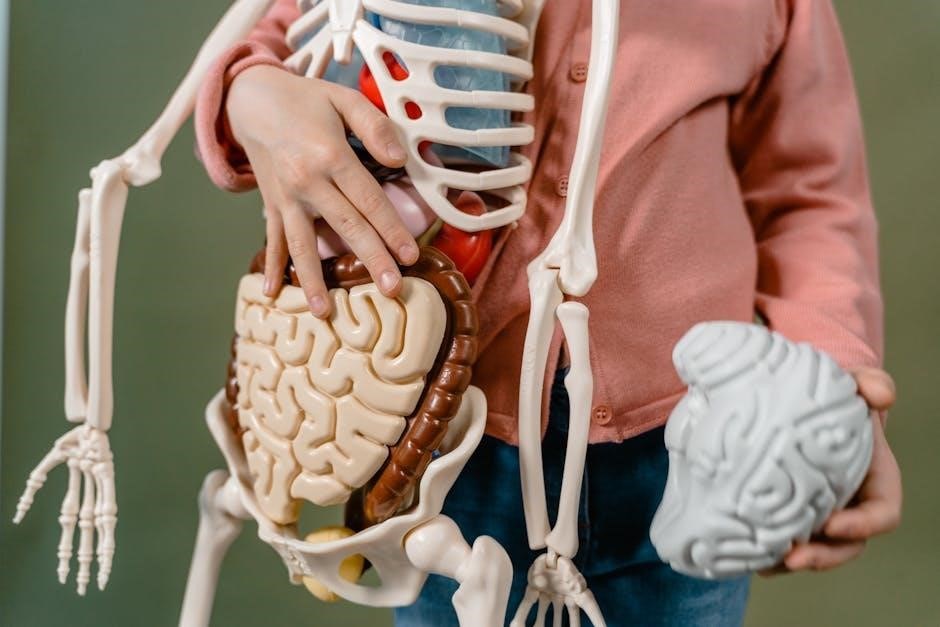
The atlas’s clarity allows users to trace pathways, understand spatial orientations, and appreciate the functional implications of anatomical proximity. Whether studying the nervous system or the musculoskeletal system, Netter’s provides a visual framework for grasping these connections.
The PDF format allows for easy zooming and detailed examination, enhancing the understanding of these vital relationships.

Formats and Accessibility
Netter’s Atlas is readily available in convenient PDF, and ePUB formats, alongside access through the Internet Archive and Google Books, ensuring broad accessibility.
PDF Format Advantages
The PDF format for Netter’s Atlas of Human Anatomy offers significant advantages for students and professionals alike. PDFs maintain consistent formatting across various devices – computers, tablets, and smartphones – ensuring the intricate illustrations appear precisely as intended. This consistency is crucial for accurate anatomical study.
Furthermore, PDFs allow for easy annotation, highlighting, and note-taking directly within the atlas, facilitating a more interactive learning experience. The ability to zoom in on detailed images without loss of quality is invaluable when examining complex structures. PDFs are also widely compatible and require minimal software, making them a universally accessible option. Downloading a PDF version provides offline access, eliminating reliance on an internet connection during study sessions.
ePUB Format Availability
Alongside the popular PDF format, Netter’s Atlas of Human Anatomy is also available in ePUB format, offering a different reading experience. ePUB files are reflowable, meaning the text adjusts to fit the screen size, making them ideal for smaller devices like e-readers. This adaptability enhances readability and comfort during prolonged study sessions.
ePUB also supports adjustable font sizes and styles, catering to individual preferences and visual needs. While PDFs excel at preserving precise formatting, ePUB prioritizes flexibility and accessibility. Some platforms, like Google Books, offer the Atlas as a digital eBook in ePUB. Choosing between PDF and ePUB depends on whether consistent visual layout or adaptable text is more important for your learning style.
Internet Archive Access
The Internet Archive provides a valuable resource for accessing older editions of Netter’s Atlas of Human Anatomy. Through its digital library, users can borrow and even stream certain versions of the Atlas online, offering a convenient alternative to purchasing physical copies. Specifically, Frank H. Netter’s work is cataloged with unique identifiers like urn:asin:1929007116 and urn:oclc:record:1028222869.
However, availability may vary, and access often depends on lending policies and digitization efforts. The Internet Archive’s collection includes records with details like urn:lcp:atlasofhumananat00nett_0, indicating a PDF version. While a fantastic resource, it’s crucial to verify the edition and legality of access before relying on it for academic purposes.

Future Developments
Innovations may integrate augmented reality, enhancing anatomical visualization, while continuous updates and new editions will ensure the Netter Atlas remains current.
Potential for Augmented Reality Integration
Augmented reality (AR) presents a transformative opportunity for the Netter Atlas. Imagine overlaying detailed, interactive 3D anatomical models directly onto the real world, using a smartphone or tablet. This could revolutionize how students learn and visualize complex structures. Instead of static images, users could rotate, dissect, and explore the human body in an immersive, engaging way.
Such integration would move beyond traditional learning methods, offering a dynamic and intuitive understanding of anatomical relationships. Developers could create AR experiences that highlight specific structures, demonstrate physiological processes, or even simulate surgical procedures. This technology could also benefit practicing clinicians, providing a valuable tool for pre-operative planning and patient education, ultimately enhancing the Netter Atlas’s utility.
Updates and New Editions
Maintaining accuracy and reflecting advancements in medical knowledge are crucial. Expect continued updates to the Netter Atlas, incorporating new imaging techniques and anatomical discoveries. Future editions will likely refine existing illustrations and add new content to address emerging areas of study within anatomy and medicine.
These revisions ensure the atlas remains a current and reliable resource for students and professionals. Digital formats, like the PDF, facilitate easier and more frequent updates compared to traditional print editions. The evolution of the Netter Atlas demonstrates a commitment to providing the most comprehensive and up-to-date anatomical information available.