Holes Human Anatomy & Physiology: A Comprehensive Overview
Holes Essentials of Human Anatomy & Physiology is a foundational text, ideal for introductory students lacking prior science background, offering a classic A&P experience.
Holes Human Anatomy & Physiology, and its concise counterpart Holes Essentials, represent a long-standing tradition of excellence in allied health education. This textbook is meticulously designed for students embarking on their journey into the fascinating world of the human body. It distinguishes itself by assuming minimal prior science knowledge, making it exceptionally accessible to a diverse student population.
The core philosophy centers on building a strong foundation in fundamental concepts before progressing to more complex topics. This approach ensures comprehension and retention. The text’s enduring popularity stems from its clear writing style, comprehensive coverage, and effective pedagogical tools. Students will find a wealth of resources to aid their learning, including detailed illustrations and practical clinical applications.
Authors and Their Expertise
Holes Human Anatomy & Physiology is a collaborative effort by a team of highly respected educators: David Shier, Jackie Butler, and Ricki Lewis. Each author brings a unique and valuable skillset to the project, ensuring a well-rounded and authoritative presentation of the material. David Shier’s background lies in the practical application of anatomical and physiological principles, while Jackie Butler contributes extensive experience in teaching and curriculum development.
Ricki Lewis, a renowned science writer, lends her expertise in translating complex scientific concepts into easily understandable language. Their combined dedication to student success is evident throughout the textbook, making it a trusted resource for generations of learners. This collaborative approach guarantees accuracy, clarity, and pedagogical effectiveness.
Target Audience & Prerequisites
Holes Human Anatomy & Physiology is specifically designed for students enrolled in introductory-level anatomy and physiology courses, often within allied health programs like nursing, medical assisting, and respiratory therapy. It’s also suitable for students in introductory biology courses with an A&P component. A key strength of this textbook is its accessibility; it deliberately assumes no prior science knowledge.
Therefore, formal prerequisites are minimal. A high school diploma or equivalent is generally sufficient. However, a basic understanding of general science concepts can be beneficial, though not required. The text’s clear explanations and abundant visual aids are crafted to support students with diverse learning backgrounds, fostering comprehension and success.
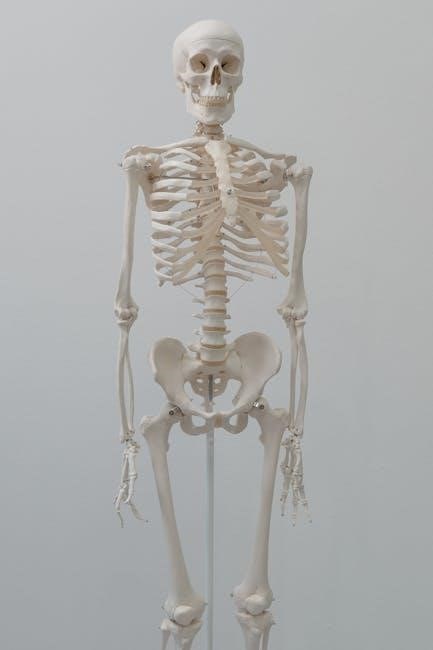
Core Concepts Covered in Holes Human Anatomy & Physiology
Holes meticulously covers fundamental A&P principles, including anatomical terminology, structural organization, basic chemistry, and the integrated functions of all major body systems.
Anatomical Terminology & Body Planes
Holes Human Anatomy & Physiology establishes a strong foundation in anatomical terminology, crucial for precise communication within the field. The text systematically introduces directional terms – superior, inferior, anterior, posterior, medial, and lateral – enabling students to accurately describe body locations and relationships.
Furthermore, it comprehensively explains the fundamental body planes: sagittal, frontal (coronal), and transverse. Understanding these planes is essential for interpreting anatomical images, such as those obtained through medical imaging techniques.
The book reinforces these concepts with practical applications, demonstrating how these terms and planes are utilized in clinical settings. This approach ensures students not only memorize definitions but also grasp their relevance to real-world anatomical studies and medical practice.
Levels of Structural Organization
Holes Human Anatomy & Physiology meticulously outlines the levels of structural organization within the human body, beginning with the chemical level – atoms and molecules. It progresses through increasingly complex levels: cells, tissues, organs, organ systems, and ultimately, the organism itself.
This hierarchical approach emphasizes how each level builds upon the previous one, demonstrating the interconnectedness of bodily functions. The text clearly explains how specific molecules form cells, how cells combine to create tissues, and so on.
By illustrating this organizational structure, Holes provides a framework for understanding how the body functions as a unified whole, rather than a collection of isolated parts. This foundational understanding is vital for comprehending physiological processes.
Basic Chemistry for Understanding Physiology
Holes Human Anatomy & Physiology recognizes that a solid grasp of basic chemistry is crucial for comprehending physiological processes. The textbook dedicates significant coverage to essential chemical principles, including atomic structure, bonding, and the properties of water – a vital component of all living organisms.
It explains key concepts like pH, acids, bases, and organic molecules (carbohydrates, lipids, proteins, and nucleic acids) in a clear and accessible manner. This foundational chemistry knowledge is then directly linked to physiological functions.
Understanding these chemical underpinnings allows students to appreciate how the body works at a molecular level, providing a deeper and more meaningful understanding of anatomy and physiology.
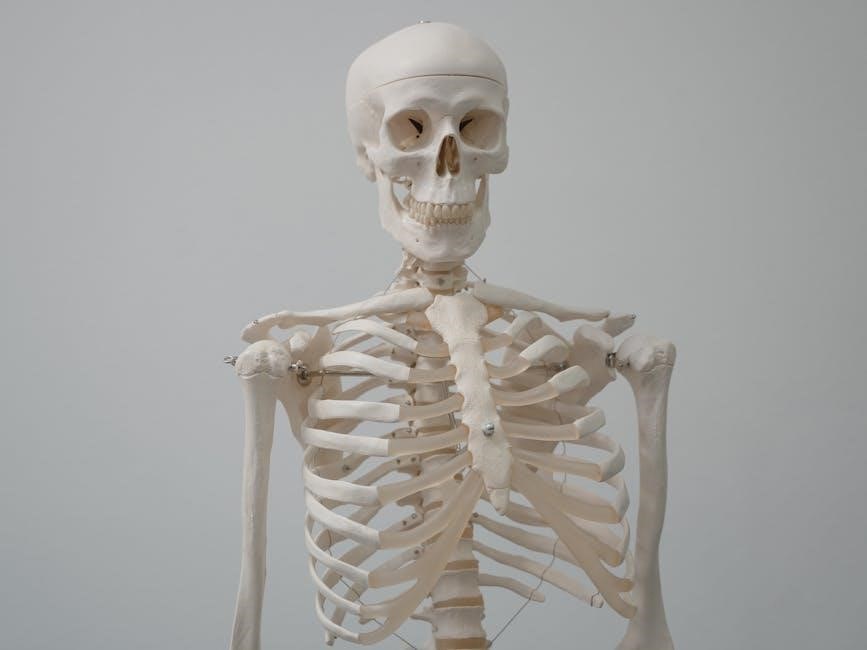
Body Systems: Anatomical Breakdown
Holes Human Anatomy & Physiology meticulously details each body system’s structure, providing a comprehensive anatomical foundation for understanding their respective functions and interrelationships.
The Integumentary System: Structure & Function
Holes Human Anatomy & Physiology presents a detailed exploration of the integumentary system, encompassing the epidermis, dermis, and hypodermis. It clarifies the diverse cell types within each layer, including keratinocytes, melanocytes, and fibroblasts, and their specific roles in skin function.
The textbook thoroughly explains the accessory structures – hair follicles, sebaceous glands, and sweat glands – detailing their anatomical features and physiological contributions to thermoregulation, protection, and sensation. Emphasis is placed on understanding how these components work in concert to maintain homeostasis.
Furthermore, the resource examines the skin’s vital functions, such as protection against pathogens, UV radiation, and dehydration, alongside its role in vitamin D synthesis and sensory perception. Clinical correlations relating to skin disorders are also frequently integrated.
Skeletal System: Bones, Joints & Cartilage
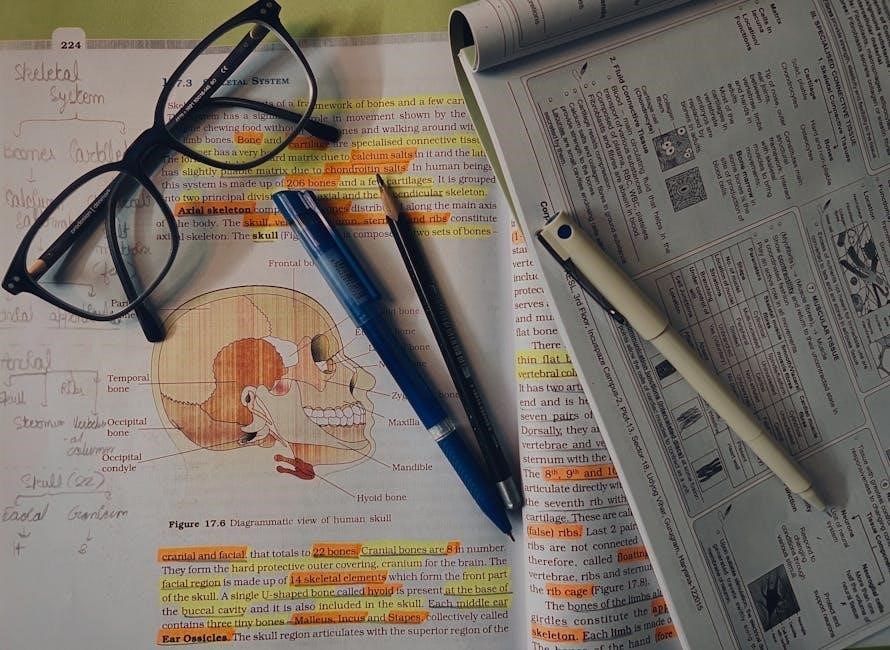
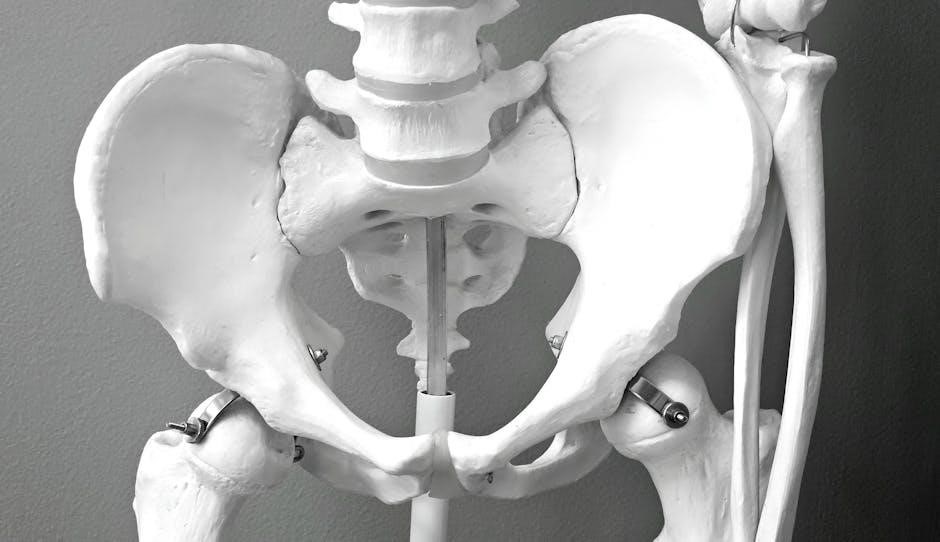
Holes Human Anatomy & Physiology delivers a comprehensive overview of the skeletal system, beginning with bone tissue – its composition, structure (compact vs. spongy), and remodeling processes. The text meticulously details the classification of bones (long, short, flat, irregular) and provides examples of each.
A significant portion is dedicated to articulating joints, categorizing them structurally (fibrous, cartilaginous, synovial) and functionally (synarthrotic, amphiarthrotic, diarthrotic). The textbook explains the diverse range of motion permitted by each joint type.
Cartilage, including hyaline, elastic, and fibrocartilage, receives focused attention, highlighting its role in providing support, cushioning, and reducing friction within joints. Clinical connections to common skeletal disorders are interwoven throughout the chapter.
Muscular System: Types & Mechanics
Holes Human Anatomy & Physiology thoroughly explores the muscular system, detailing the three muscle tissue types: skeletal, smooth, and cardiac. It meticulously explains the hierarchical structure of skeletal muscle, from fascicles to myofibrils and ultimately, the sarcomere – the functional unit of contraction.
The textbook clearly outlines the sliding filament theory, explaining the roles of actin, myosin, and calcium ions in muscle contraction. Neuromuscular junctions and the process of excitation-contraction coupling are also covered in detail.
Furthermore, it examines muscle mechanics, including concepts like leverage, muscle tone, and different types of muscle contractions (isotonic, isometric). Clinical correlations relating to muscle injuries and disorders are integrated throughout the chapter.
Nervous System: Brain, Spinal Cord & Nerves
Holes Human Anatomy & Physiology provides a comprehensive overview of the nervous system, beginning with the fundamental units – neurons and glial cells. It details neuronal structure, function, and the mechanisms of impulse transmission, including action potentials and synaptic transmission.
The textbook systematically explores the central nervous system, dissecting the brain’s major regions (cerebrum, cerebellum, brainstem) and their respective functions. Spinal cord anatomy and its role in reflex arcs are also thoroughly explained.
Peripheral nervous system components, including cranial and spinal nerves, are examined, alongside sensory receptors and their roles in detecting stimuli. Clinical connections to neurological disorders enhance understanding.
Endocrine System: Hormones & Glands
Holes Human Anatomy & Physiology meticulously details the endocrine system, emphasizing the crucial role of hormones as chemical messengers. The text explores hormone classification – steroid, protein, and amine hormones – and their mechanisms of action, including receptor binding and cellular effects.
Each major endocrine gland, including the pituitary, thyroid, parathyroid, adrenal, pancreas, and gonads, receives dedicated coverage. Their anatomical location, hormone production, and physiological functions are thoroughly explained.
The textbook clarifies how hormonal regulation maintains homeostasis, covering feedback loops (positive and negative) and the interplay between the endocrine and nervous systems. Clinical correlations link endocrine dysfunction to various diseases.
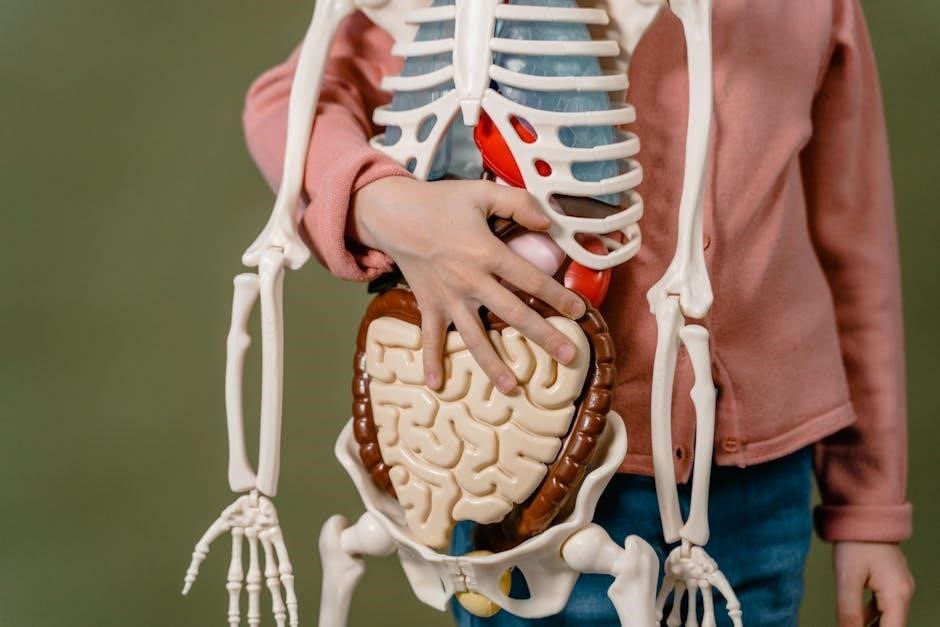
Body Systems: Physiological Processes
Holes Human Anatomy & Physiology expertly bridges anatomical structures with their dynamic functions, detailing how each system contributes to overall bodily homeostasis and survival.
Cardiovascular System: Heart, Blood Vessels & Blood
Holes Human Anatomy & Physiology provides a detailed exploration of the cardiovascular system, beginning with the heart’s intricate anatomy and its crucial pumping mechanisms. The text meticulously outlines the structure and function of blood vessels – arteries, veins, and capillaries – emphasizing their roles in efficient blood circulation.
Furthermore, it delves into the composition of blood, including erythrocytes, leukocytes, and platelets, and their respective contributions to oxygen transport, immune defense, and blood clotting. The book clarifies how these components work in concert to maintain homeostasis and support the metabolic needs of the body’s tissues.
Clinical connections are interwoven, illustrating how disruptions in cardiovascular function manifest as disease.
Respiratory System: Gas Exchange & Ventilation
Holes Human Anatomy & Physiology comprehensively covers the respiratory system, starting with a detailed examination of the upper and lower respiratory tracts. It elucidates the mechanics of ventilation – inhalation and exhalation – and the role of key structures like the diaphragm and intercostal muscles.

The text meticulously explains the process of gas exchange, occurring within the alveoli of the lungs, and how oxygen is transported to the bloodstream while carbon dioxide is removed;
Furthermore, it explores the regulation of breathing, highlighting the influence of the brainstem and chemoreceptors. Clinical correlations demonstrate how respiratory dysfunction impacts overall health, providing a practical understanding of common respiratory ailments.
Digestive System: Breakdown & Absorption
Holes Human Anatomy & Physiology provides a thorough exploration of the digestive system, beginning with the mechanical and chemical breakdown of food. It details the roles of each organ – from the mouth and esophagus to the stomach, small intestine, and large intestine – in this complex process.
The text meticulously explains the enzymatic digestion of carbohydrates, proteins, and fats, alongside the absorption of nutrients into the bloodstream. It also covers the liver, pancreas, and gallbladder’s crucial accessory functions.
Clinical connections illustrate digestive disorders and their impact on nutrient uptake, offering a practical understanding of gastrointestinal health and disease.
Urinary System: Waste Removal & Homeostasis
Holes Human Anatomy & Physiology comprehensively examines the urinary system’s vital role in maintaining homeostasis. The text details the structure and function of the kidneys, ureters, urinary bladder, and urethra, emphasizing their collaborative effort in filtering blood and eliminating metabolic waste.
It meticulously explains the processes of glomerular filtration, tubular reabsorption, and tubular secretion, crucial for regulating blood volume, electrolyte balance, and pH levels.
Furthermore, the book explores hormonal control of kidney function and discusses common urinary system disorders, providing a complete understanding of this essential physiological system.
Reproductive System: Anatomy & Physiology
Holes Human Anatomy & Physiology delivers a detailed exploration of both male and female reproductive systems. The textbook meticulously outlines the anatomy of the gonads, ducts, glands, and external genitalia, clarifying their individual contributions to reproductive processes.
It thoroughly explains gametogenesis – spermatogenesis and oogenesis – alongside hormonal regulation of the reproductive cycle. The text also covers fertilization, embryonic development, and the physiological changes during pregnancy.
Furthermore, it addresses sexually transmitted infections and reproductive health issues, providing a comprehensive understanding of this complex and vital system.

Key Features & Learning Aids
Holes Human Anatomy & Physiology incorporates clinical applications, vibrant diagrams, and practice exercises to reinforce learning and connect concepts to real-world scenarios.
Clinical Applications & Case Studies
Holes Human Anatomy & Physiology distinguishes itself through the integration of compelling clinical applications directly linked to anatomical and physiological principles. These aren’t merely add-ons; they’re woven into the narrative, demonstrating how core concepts manifest in real-world medical scenarios.
The textbook utilizes carefully selected case studies that challenge students to apply their knowledge to diagnose, treat, and understand various conditions. These scenarios promote critical thinking and problem-solving skills, bridging the gap between theoretical understanding and practical application.
Furthermore, the clinical content is regularly updated to reflect current medical advancements and best practices, ensuring students are exposed to the most relevant and accurate information available. This focus on clinical relevance enhances engagement and prepares students for future healthcare careers.
Visual Aids: Diagrams & Illustrations
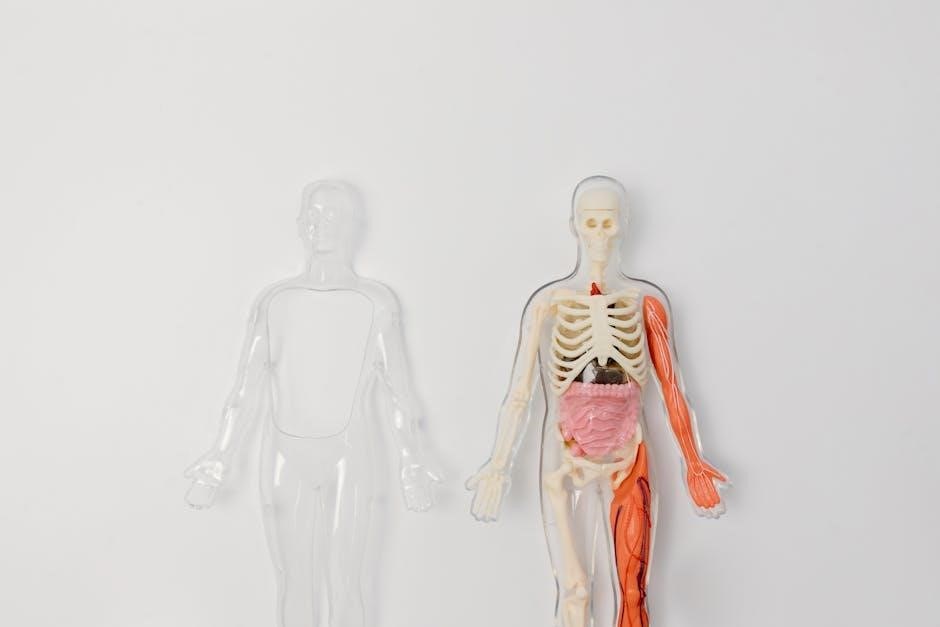
Holes Human Anatomy & Physiology excels in its presentation of complex biological information through a rich array of high-quality visual aids. The textbook features meticulously detailed diagrams and full-color illustrations designed to clarify intricate anatomical structures and physiological processes.
These visuals aren’t simply decorative; they are integral to the learning experience, providing students with a clear and accessible way to visualize concepts that might be difficult to grasp through text alone. The illustrations are carefully labeled and annotated, promoting accurate understanding and retention.
Furthermore, the strategic placement of visuals alongside relevant text reinforces learning and facilitates a deeper comprehension of the material. The book’s visual approach caters to diverse learning styles, enhancing overall student engagement.
Review Questions & Practice Exercises
Holes Human Anatomy & Physiology incorporates a robust suite of review questions and practice exercises designed to solidify student understanding and promote active learning. These resources are strategically placed throughout each chapter, allowing students to regularly assess their comprehension of key concepts.
The exercises range in format, including multiple-choice questions, fill-in-the-blanks, labeling exercises, and short-answer prompts. This variety caters to different learning preferences and encourages students to engage with the material in multiple ways.
Answer keys are typically provided, enabling students to self-assess their performance and identify areas where further study is needed. These tools are crucial for exam preparation and building a strong foundation in anatomy and physiology.
Digital Resources & Supplements
Holes Human Anatomy & Physiology often includes access to an Online Learning Center, interactive animations, and videos to enhance the learning experience for students.
Online Learning Center & Access Codes
Holes Human Anatomy & Physiology textbooks frequently come packaged with access codes granting students entry to a dedicated Online Learning Center (OLC). This digital hub typically houses a wealth of supplementary materials designed to reinforce understanding and facilitate self-assessment.
Expect to find practice quizzes, interactive exercises, and additional review questions mirroring the textbook’s content. Some OLCs also feature downloadable flashcards, labeling activities, and even virtual dissection tools. Access codes are usually one-time use and tied to a specific edition of the textbook.
Students should carefully register their access code promptly to avoid any issues. It’s crucial to verify compatibility with the correct textbook edition before purchase, as codes are often edition-specific and won’t function otherwise.
Interactive Animations & Videos
Holes Human Anatomy & Physiology learning is significantly enhanced through the inclusion of dynamic interactive animations and videos. These resources visually demonstrate complex physiological processes that can be challenging to grasp from static textbook images alone.
Animations often illustrate muscle contractions, nerve impulse transmissions, and the intricate mechanics of organ systems. Videos may feature dissections, clinical procedures, or expert explanations of key concepts. These multimedia elements cater to diverse learning styles, making the material more accessible and engaging.
Access to these resources is frequently bundled with textbook purchases, often through the Online Learning Center. They provide a powerful tool for students to visualize and solidify their understanding of human anatomy and physiology.
Editions & Updates
Holes Human Anatomy & Physiology has seen numerous editions, continually updating its content to reflect the latest discoveries and advancements in the field.
Comparison of Different Editions
Comparing editions of Holes Human Anatomy & Physiology reveals a consistent commitment to clarity and pedagogical effectiveness. Earlier editions, while solid foundations, lacked the extensive digital resources now available. The shift towards incorporating interactive animations and online learning centers significantly enhances student engagement and comprehension.
Subsequent editions demonstrate a refinement of illustrations and a streamlining of content, focusing on core concepts. Updates reflect current medical terminology and physiological understandings. The inclusion of more clinical applications and case studies bridges the gap between theory and practice, preparing students for healthcare careers. Newer versions also feature revised review questions and practice exercises, designed to reinforce learning and assess understanding more effectively.
Recent Updates & Revisions (as of 04/28/2026)
As of April 28, 2026, the latest revisions to Holes Human Anatomy & Physiology prioritize accessibility and contemporary relevance. Updates address emerging research in areas like microbiome influence on digestive health and advancements in neurological understanding. The text now incorporates more diverse clinical case studies, reflecting a broader patient population.
Significant enhancements include expanded coverage of genetic factors in disease and refined explanations of hormonal regulation. Interactive online resources have been updated with new animations illustrating complex physiological processes. Furthermore, the authors have streamlined content to improve clarity and focus on essential concepts, ensuring students grasp fundamental principles effectively. The digital supplements now offer personalized learning paths.
Availability & Access Issues
Access to the PDF version of Holes Human Anatomy & Physiology raises legality concerns; publishers are actively working to restore access to resources.
PDF Availability & Legality
Obtaining a PDF copy of Holes Human Anatomy & Physiology often leads to questions regarding legality and authorized access. Numerous online sources advertise downloadable versions in formats like PDF, ePub, DOC, and more, but many of these may infringe on copyright.
The Internet Archive has faced challenges regarding access to a substantial collection of books, including potentially this textbook, prompting calls for publishers to restore access. Downloading from unofficial sources carries risks, including malware and violating intellectual property rights.
Legitimate access typically requires purchasing the textbook or utilizing authorized digital resources through an Online Learning Center, often requiring access codes. Always prioritize legal and ethical acquisition methods to support authors and publishers.
Internet Archive Access & Concerns
The Internet Archive, a digital library aiming to provide universal access to knowledge, has recently experienced disruptions affecting access to a significant number of books – potentially including digital copies related to Holes Human Anatomy & Physiology. A reported 500,000 books have had access restricted, prompting advocacy for publishers to reinstate availability.
This situation raises concerns about the long-term preservation and accessibility of scholarly materials. While the Archive offers valuable resources, its legal standing regarding digitized textbooks is complex, often involving copyright considerations and publisher agreements. Users seeking the PDF version should be aware of these limitations and potential access issues.
Exploring official publisher channels remains the most reliable method for obtaining legitimate digital access.